
Stop Building Dashboards Nobody Uses: How to Make Your PMO Reporting Actually Drive Decisions
I had a conversation with a PMO Director who was genuinely frustrated. She told me, "Bruno, I spend 40% of my week building reports that I'm not even sure anyone reads." I've heard some version of that story more times than I can count over the past two decades.
The problem isn't your data. The problem isn't even your tools. The problem is that most PMO reporting was designed to track activity, not to drive decisions. And in 2026, that gap is becoming a career risk.
Let me paint you a picture. You walk into your monthly portfolio review. You've got 47 slides. Color-coded status indicators. Gantt charts for days. Burn-down charts. Resource utilization percentages down to the decimal. You present for 45 minutes. The executives nod politely. And then they go right back to making decisions based on gut feel and hallway conversations.
If this sounds familiar, you're not alone.
The PMOs that are thriving right now have figured out something critical: executives don't need more data. They need fewer, better answers to very specific questions. Questions like: "Which three initiatives should we stop funding this quarter?" or "Where is our biggest capacity bottleneck in Q3?" or "Are we actually on track to deliver the benefits we promised the board?"
That last question is where most PMOs fall apart. And it connects directly to what I call the Benefits Realization and Sustainment layer of the Vision2Value Framework. It's the layer that separates PMOs that survive from PMOs that become indispensable.
So how do you fix this? Let me share what's working for the PMO leaders we're working with right now.
First, kill the mega-dashboard. I know that sounds counterintuitive, especially if you've spent months building it out in Smartsheet or whatever tool you're using. But here's what I've learned: one massive dashboard that tries to show everything ends up showing nothing. Instead, build role-specific views. Your CEO needs a one-page portfolio health summary with clear recommendations. Your program managers need resource contention alerts. Your finance partners need benefits tracking tied to budget cycles. Same data, different lenses.
In Smartsheet, this is actually straightforward once you get your data architecture right. Use a single source of truth for project and portfolio data, then build targeted dashboards and reports that pull from that foundation. We've helped organizations set this up where executives get a real-time strategic view that takes them less than two minutes to review, and that two-minute view gives them more clarity than a 47-slide deck ever did.
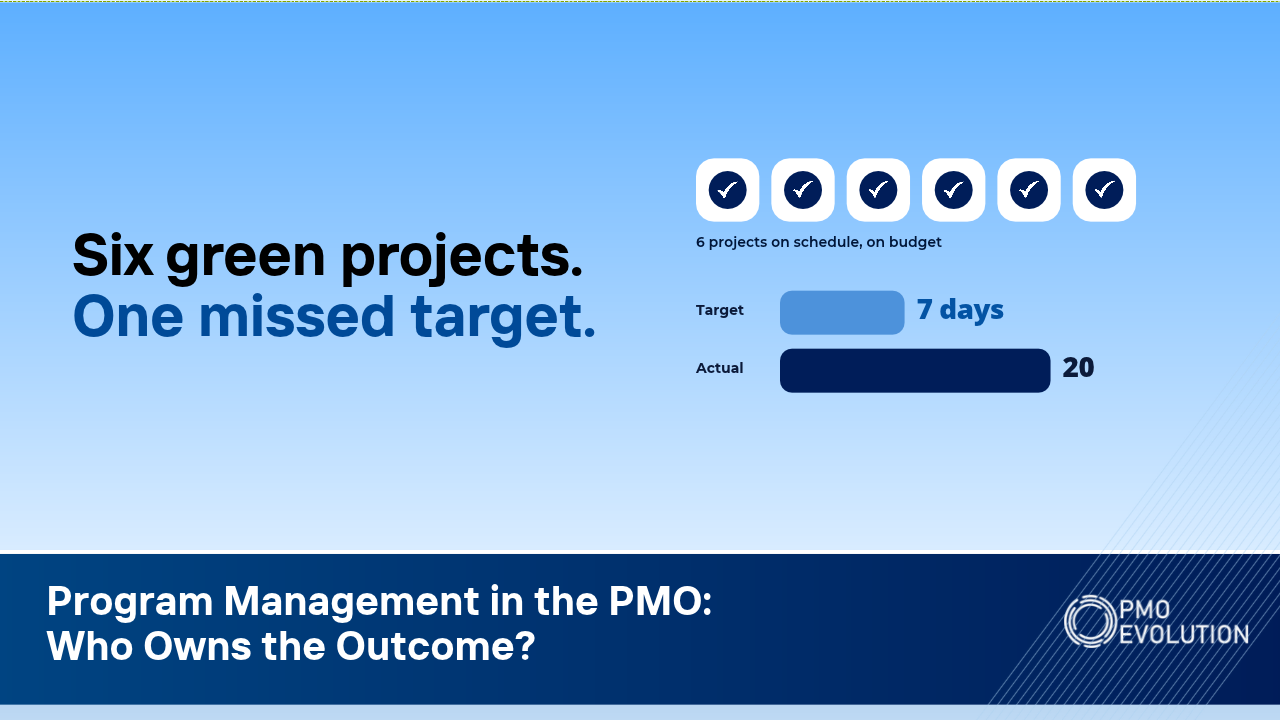
Second, shift from status reporting to decision reporting. This is a mindset change more than a technical one. Instead of saying "Project X is yellow," train your team to say "Project X requires a scope decision by April 15 or we risk missing the Q3 revenue target by $2M." One tells you the weather. The other tells you what to do about it.
The best PMO leaders I know have started structuring their portfolio reviews around three questions: What decisions need to be made this week? What trade-offs are we currently navigating? And what risks have changed since our last conversation? That's it. Everything else is backup material that people can read on their own time.
Third, build a portfolio pruning muscle. This is one of the biggest trends I'm seeing in 2026, and honestly, it's overdue. Most organizations are still running too many initiatives with too few people. The research backs this up: organizations that actively terminate underperforming projects see 30-40% better outcomes on their remaining portfolio.
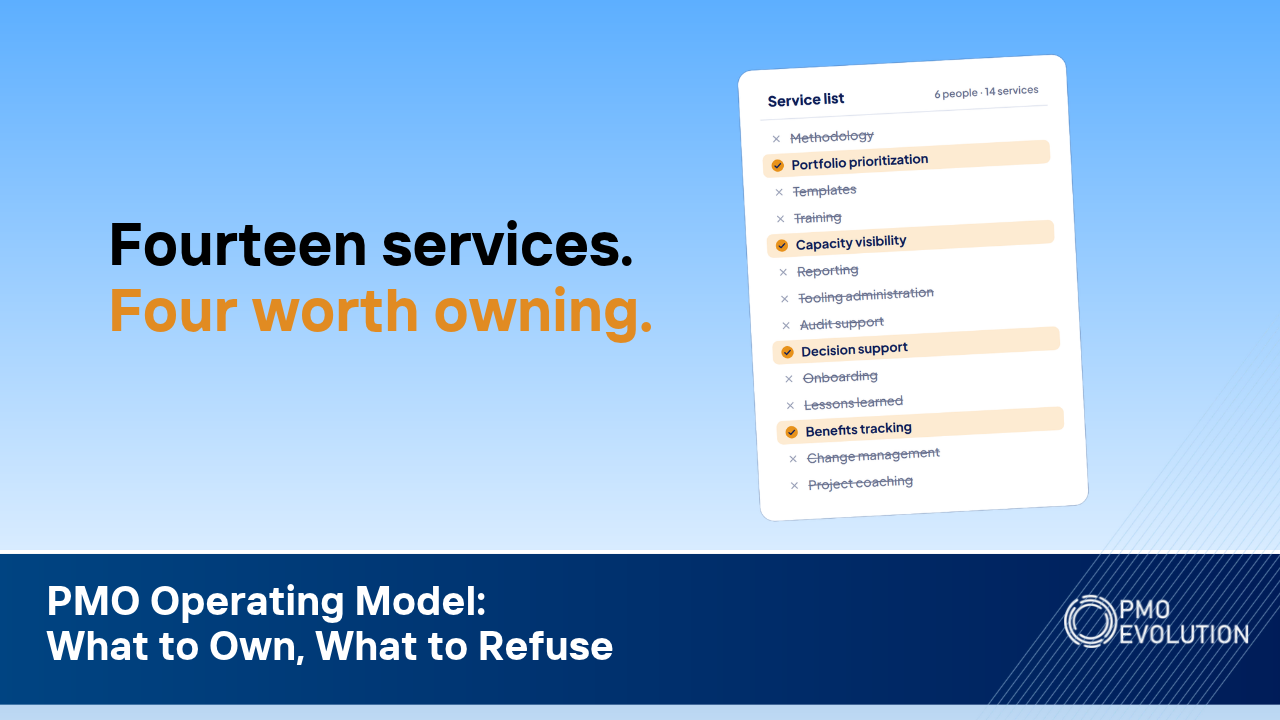
But pruning is hard because nobody wants to be the one to kill a project that some VP is emotionally attached to. This is where your PMO earns its keep. Build objective criteria for portfolio continuation. Things like: Is this initiative still aligned with our top three strategic priorities? Is the benefits case still valid? Do we have the capacity to deliver it well? If the answer to any of those is no, it goes on the discussion list. Not the kill list, but the discussion list. That distinction matters because it takes the emotion out of it and turns it into a business conversation.
This connects to the Portfolio Definition layer of the Vision2Value Framework, where we help organizations establish clear intake criteria, prioritization models, and yes, exit criteria. You'd be surprised how many PMOs have a robust intake process but absolutely no formal mechanism for stopping work that's no longer serving the strategy.
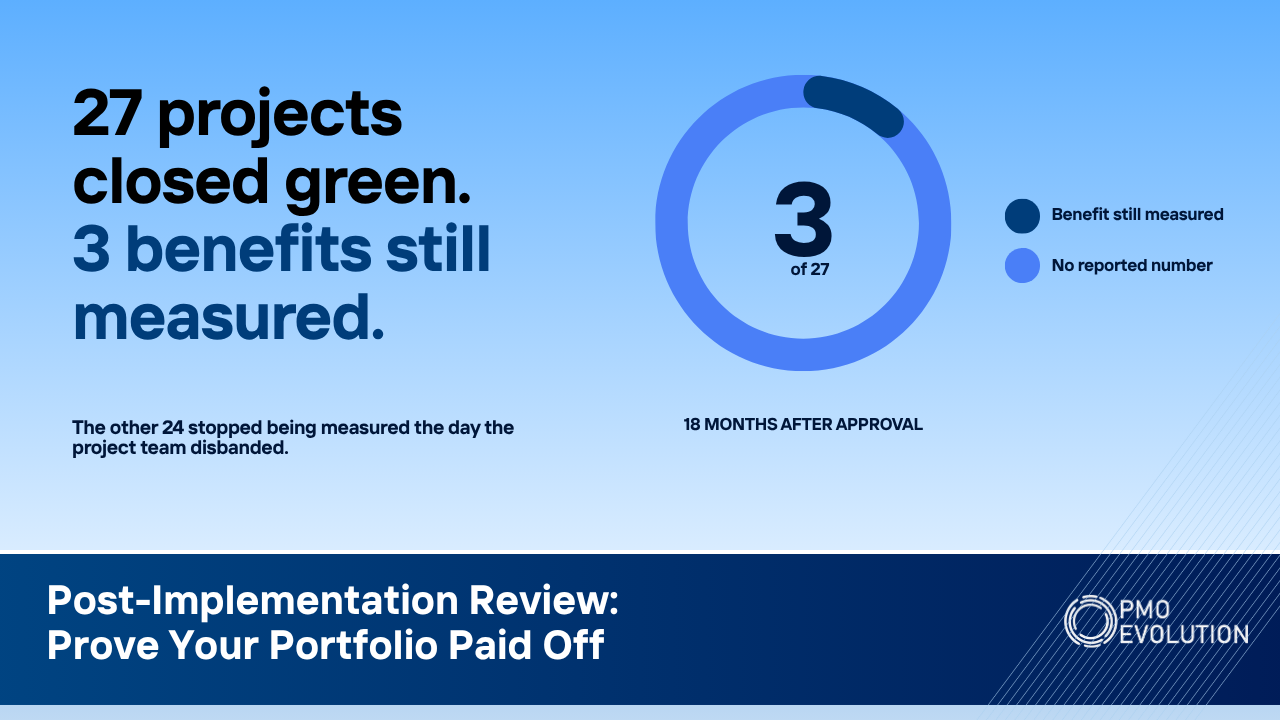
Fourth, close the loop on benefits. I cannot stress this enough. If your PMO tracks project delivery but doesn't track whether the business actually got what it paid for, you're only doing half the job. And it's the less important half.
Set up a simple benefits register. For every major initiative, document the expected benefits at approval, assign a business owner (not a PM, a business owner), define how you'll measure success, and schedule check-ins at 3, 6, and 12 months post-delivery. In Smartsheet, you can automate most of this with workflows and reminders so it doesn't become another administrative burden.
Here's the payoff: when you can walk into a board meeting and say, "Last year we delivered 12 major initiatives, and here's the measurable business impact of each one," you become untouchable. Nobody is going to question the PMO's value when you can prove it with numbers.
The PMO landscape is shifting fast right now. AI is changing how we forecast and analyze. Portfolio tools are getting smarter. But the fundamentals haven't changed: your PMO exists to help the organization make better decisions about where to invest its limited time, money, and people.
If your reporting isn't driving those decisions, it doesn't matter how pretty the dashboard is.
Start this week. Pick one executive stakeholder. Ask them: "What's the one question you wish our portfolio reports answered but currently don't?" Then go build that answer. That's your first step toward a PMO that doesn't just report on work but actually shapes the direction of the business.
Visit our website: pmoevolution.com
Follow us on LinkedIn: PMO Evolution
Subscribe on YouTube: PMO Evolution