
A CFO asked me a question in a portfolio review that I could not answer. She had the prior year's approved business cases in front of her, twenty-seven of them, and she asked which ones were delivering what they said they would deliver.
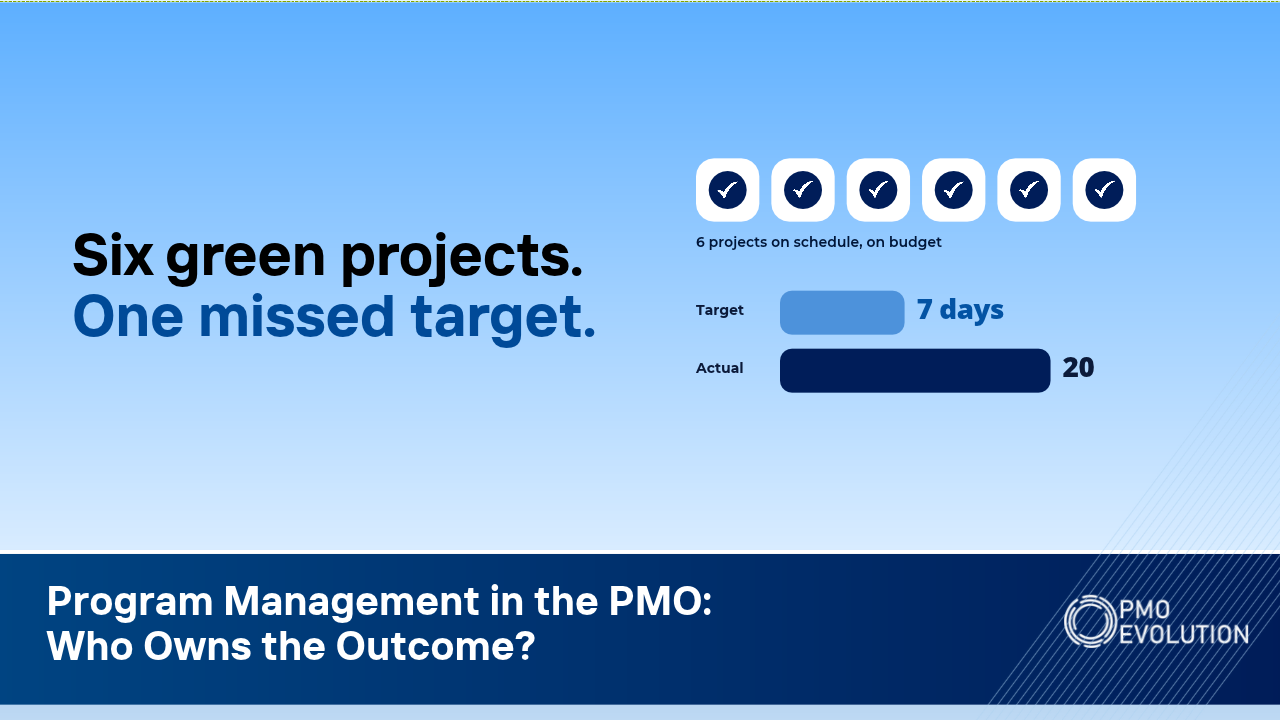
I had a close-out report for every project. All twenty-seven were closed. Most had closed green. What I did not have was a single current number for any of the benefits those cases had promised.
I said I would come back to her with an answer. She gave me two weeks, which felt generous at the time and turned out to be about right.
So I went looking. Eighteen months after approval, three of the twenty-seven benefits were still being measured. The other twenty-four had stopped being measured on the day the project team disbanded.
Nobody had hidden anything. Our close-out checklist asked whether the deliverables were accepted, whether the budget was reconciled, and whether lessons were captured. It never asked who would report the benefit six months later, or to whom. The post-implementation review we ran was a project review under a different name. It looked backwards at how the work went and never forwards at whether the money came back.
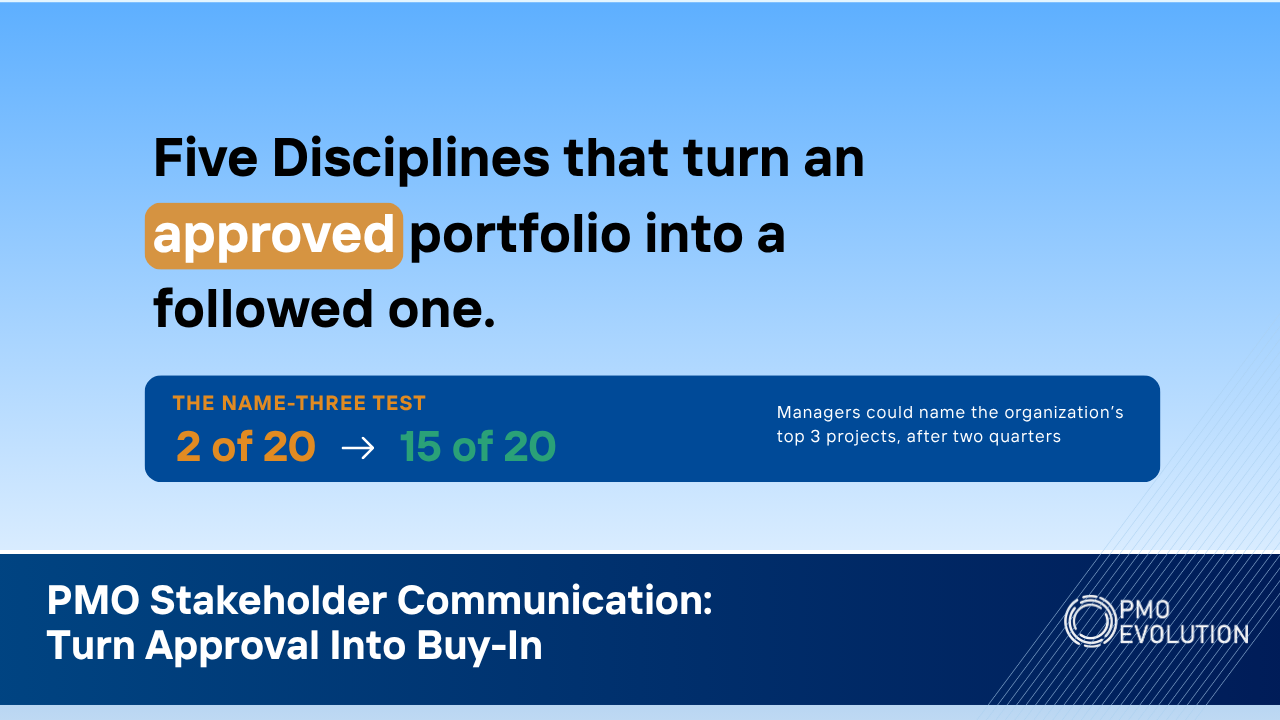
Here are the five disciplines I have used since then. They take about two hours per project to set up and they change what a portfolio can prove.
Who owns this number in six months?
Ask that question out loud in the close-out meeting and watch what happens. In most organizations the answer is a pause, then a name from the project team, then the observation that the person is rolling off next Friday.
A benefit owner has to sit outside the project, because the project ends and the benefit does not. In practice that means an operations leader, a business unit head, or a functional director whose own targets reference the number. That rules out the project manager and it rules out the PMO.
Get it in writing, one paragraph, accepted by that person and visible to their manager. I have had projects held open for three weeks because no operational leader would accept the number, and every one of those three-week delays taught the organization more than the project did.
Name the measurement source before you agree the target
Most benefit statements name a target and leave the measurement to the future. A statement promises a twelve percent reduction in handling time, or four hundred thousand in annual savings, and nobody asks which report produces the figure.
So make the source part of the statement. Write down which system, which report, which field, and who can run it. Then run it once before close, on the current baseline, so the first checkpoint has something to compare against.
This one discipline killed more inflated business cases in my portfolios than any review board. A sponsor who cannot name where the number comes from usually revises the number.
Put four checkpoints in a calendar, not in a plan
A checkpoint inside a project plan dies with the plan. Four quarterly checkpoints in the benefit owner's calendar, with a named reader on each one, survive the project.
I use four quarters as the default because most operational benefits need two quarters to stabilise and two more to prove a trend. Regulatory and cost-avoidance benefits sometimes need eight. Pick the number deliberately and write it down.
The reader matters as much as the date. A checkpoint that produces a report nobody reads is an administrative task. Give each checkpoint a person who has to do something with the result, usually the executive who signed the case.
Report the overshoots with the misses
The first year I ran this, three findings came out of it. A platform we had called a success was delivering about forty percent of its promised saving. A training program we had almost cancelled was delivering more than its case claimed. And two benefit owners told us the number had never been theirs to move, which was a governance problem we had created at approval.
We moved money on the first two. That is the part that turns benefits tracking from an audit into a portfolio decision. If the only thing you ever report is the shortfall, benefits tracking becomes a compliance exercise that sponsors learn to survive. Report the projects beating their case with the same energy, and the next funding round gets easier for everyone.
Close the loop into next year's portfolio
The last discipline is the one most PMOs skip. Every verified benefit, high or low, is evidence about how your organization estimates value. After two years of checkpoints I could tell a sponsor that process-redesign cases in our portfolio came in at roughly eighty percent of forecast and technology-platform cases at closer to fifty.
That changes prioritization. A record of what your own organization has actually delivered, applied to the next set of business cases, does more work than any scoring model.
It also changes how sponsors write cases. Once a business unit head knows the number will be checked four times after go-live, and that the result will sit next to their name in a portfolio review, the forecast arrives closer to reality. I have watched claimed savings in a funding round drop by a third in the second year of running checkpoints, with no instruction from the PMO to be more conservative.
Where Smartsheet does the work
The mechanics matter, because a benefits register maintained in a spreadsheet on somebody's desktop lasts about one quarter.
I build the benefit register as a sheet with one row per benefit, not per project. Columns for the owner, the measurement source, the baseline, the target, the target date, and one column per checkpoint. Automated workflows send each checkpoint request to the benefit owner two weeks before the date, and an update request collects the number straight into the row without anyone forwarding an email. A dashboard rolls the portfolio into three figures: benefits verified, benefits behind, benefits with no reported number. Control Center keeps the register consistent when new projects are provisioned, so the row exists from the day the project is approved instead of being created at close.
The three-figure dashboard is what I put in front of an executive committee. It takes them about fifteen seconds to see which of those three numbers is the problem.
What to do next week
Pick the five largest projects your organization closed in the last twelve months. For each one, find the benefit statement and try to get the current number. Give yourself two days.
Count how many you could produce. Take that count to your next portfolio review and read it out.
That number is the real starting point for every conversation about portfolio value you will have in 2027.
PS. If portfolio benefits and strategic tracking are where you want to go deeper on the credential side, the PfMP Accelerator launches in January 2027 and covers all five exam domains, including the value-and-benefits work above. Details at pmoevolution.com/training/pfmp, and PMO Pulse is where the launch date will be announced first.