
A CFO once asked me two questions in the same breath. What does your PMO cost us, and what did it return? I had the first number to the cent. I had an answer to the second one that took me four minutes to say and did not survive a follow-up.
That meeting is the reason I write about this every October. Budget conversations for the next year are happening now, and the PMO is one of the few functions in the building that has to argue for its own existence using numbers it collected for someone else.
The question that ends PMO budget conversations
The question is never "is the PMO working hard enough." Nobody doubts that. The question is whether the money spent on the PMO shows up anywhere else in the business, and most PMO leaders answer it with activity. Projects tracked. Reports produced. Gate reviews held. Templates adopted. Every one of those is a count of what the PMO did, and a finance executive hears a cost centre describing its own throughput.
I have sat on both sides of that conversation. The PMOs that kept their funding did not have better slides. They had a different set of numbers ready before anyone asked.
What does a CFO actually want from a PMO budget review?
Three things, in this order:
-
Where the money went
- What it bought, and
- What you stopped
Nothing about maturity levels, nothing about process compliance, nothing about how many project managers are certified. A CFO is deciding whether this function changes outcomes or records them.
Here is what I suggest you to bring to that conversation now.
Five disciplines that protect PMO funding
1. Separate what the PMO costs from what the portfolio returns
These are two different numbers and most PMO leaders present them as one. The PMO cost is salaries, tooling, training and whatever share of overhead gets allocated to you. Know it to the quarter.
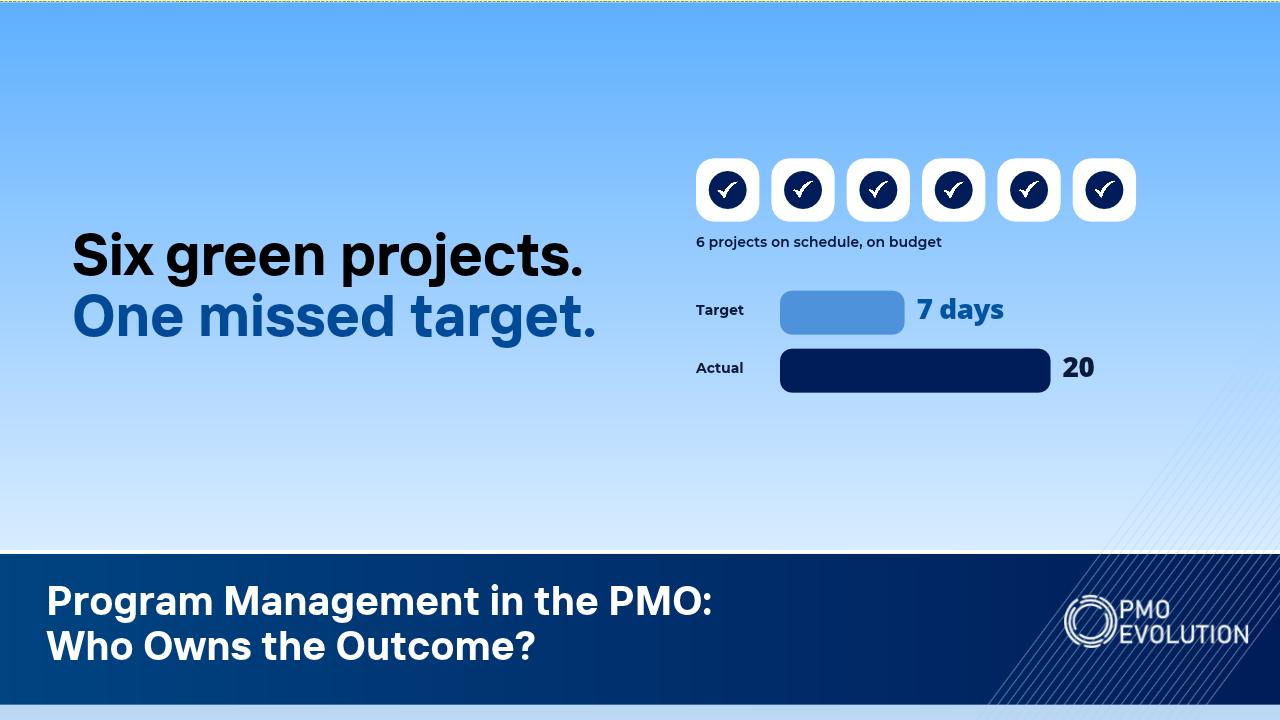
The portfolio return is the realized benefit of the work the portfolio delivered. Present them side by side and never claim the second number as the PMO's achievement. The PMO's claim sits in the third discipline.
2. Report benefits against the business case, not against the plan
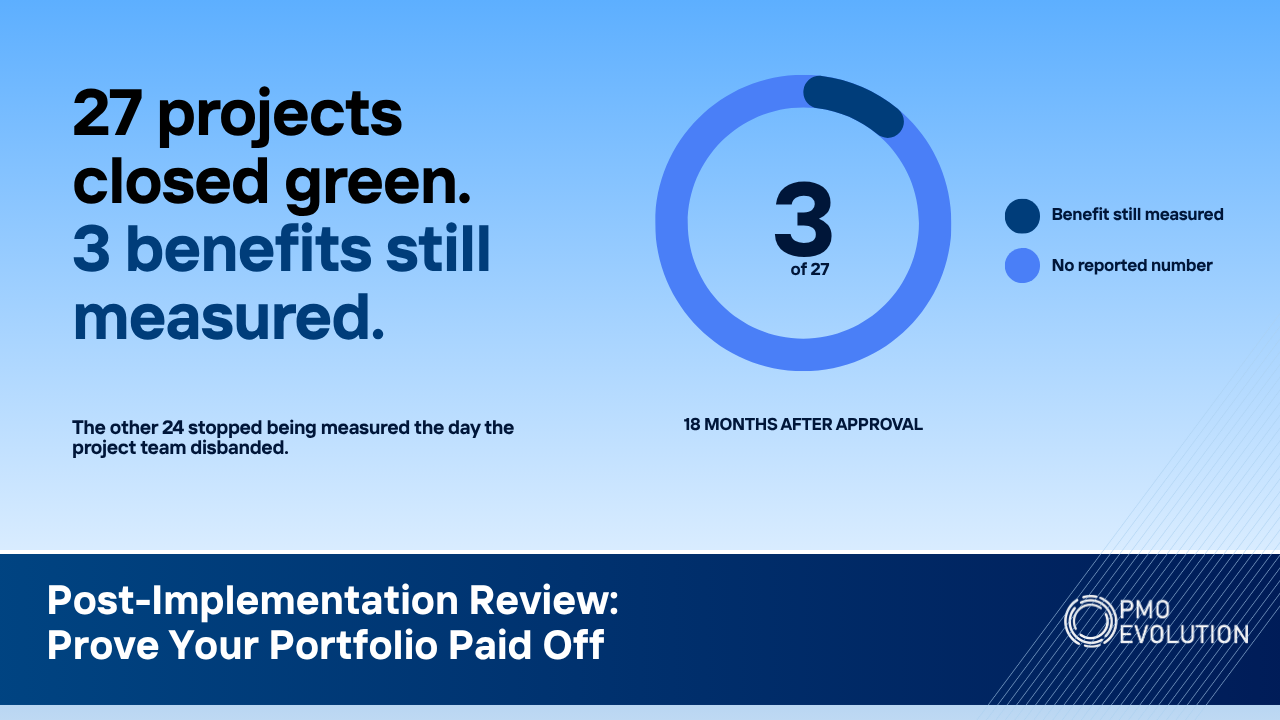
Delivery reporting compares the project to its plan. Benefits reporting compares the result to the promise that funded it. Pull every business case approved eighteen to twenty-four months ago, list the benefit each one promised, and put the measured figure next to it.
On the first run of this exercise most portfolios find that fewer than one in four approved benefits is still being measured. That gap is the single strongest argument for funding a PMO, because nobody else in the organization is going to go and look.
3. Price the decisions you changed
This is the PMO's own value, and it is countable. Over the last twelve months, which portfolio decisions went differently because of work your office did? A project stopped at 40 percent spend after a benefits review. A duplicate request caught at intake. A sequencing change that freed two architects for a committed program. Write each one as a line with a dollar figure and the date. Ten of those lines is a stronger budget defense than any maturity assessment, because each line is a decision an executive in that meeting remembers making.
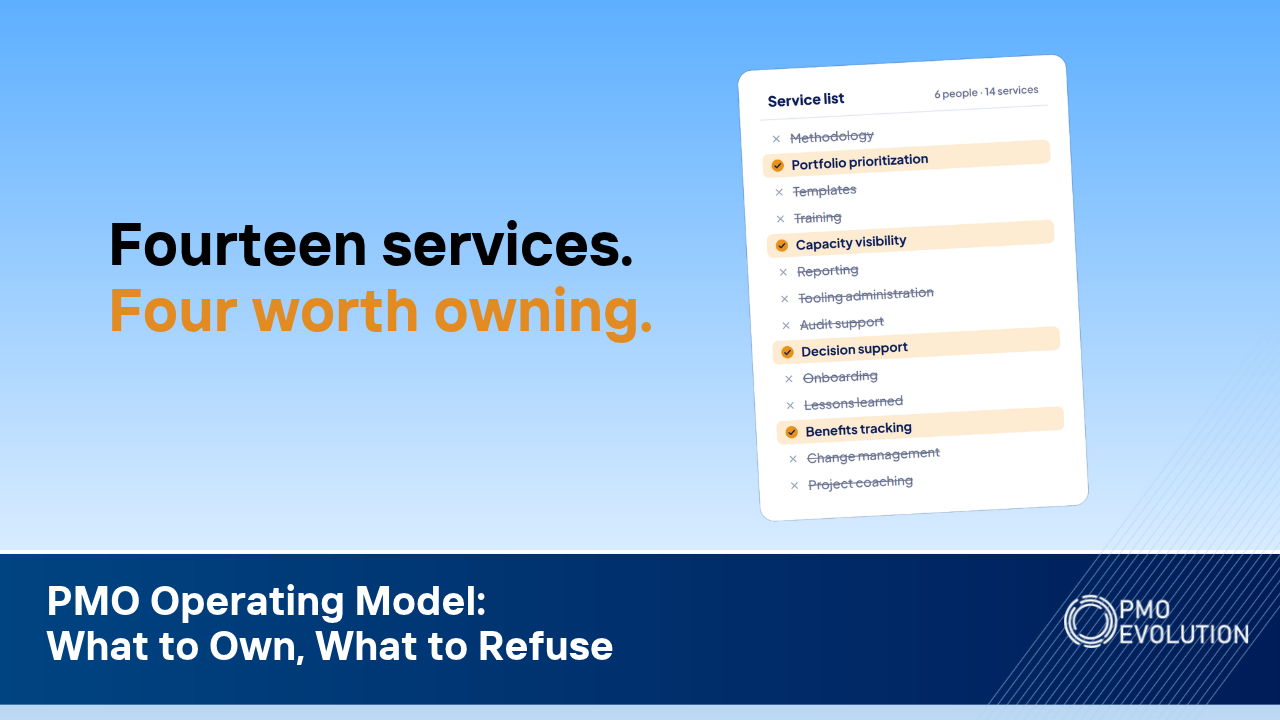
4. Show the work you stopped
Every PMO leader lists what the portfolio delivered. Very few list what the portfolio declined, deferred or killed, and that list is where most of the preserved capacity sits. Count the requests that did not enter the portfolio and the projects that were stopped before completion, with the committed spend avoided on each. Put that avoided spend next to the PMO annual cost on the same page. In the portfolios I have worked in, that comparison is often the strongest line in the review.
5. Put the whole thing on one screen
- Four numbers, one screen, no appendix:
- PMO cost for the year
- Portfolio benefit measured against approved business cases
- Decisions changed, with value attached
- Spend avoided
If a question in the meeting needs a different cut of the data, open the underlying view live. A deck that runs to forty slides tells the room you have a lot of activity to account for.
One warning on that screen. Do not round the PMO cost down and do not present the portfolio benefit as a range. A soft number invites a conversation about the number instead of a conversation about the portfolio, and that conversation goes badly for whoever brought the soft number.
What happens when you only have two of the four
Most PMO leaders reading this will have the cost figure and some version of the benefit figure, and nothing on decisions changed or spend avoided. That is a normal starting position, and it is still worth walking into the review with it, as long as you say which two are missing and when they will exist.
I have watched that work. A PMO director told her executive committee she could show cost and delivered benefit, that she could not yet price the decisions her office had changed, and that she would have both figures by the end of the first quarter. She asked for the funding to build the measurement. She got it, because she was the only leader in that meeting who named her own gap before anyone else found it.
Where Smartsheet does the work
The reason most PMOs cannot assemble those four numbers in October is that the data sits in four places and none of them talk. Business cases live in documents, actuals live in finance, decisions live in meeting minutes, and stopped work lives in somebody's memory.
Two builds fix most of it:
- First, a benefits register where every approved business case has a benefit owner, a measurement method, a measurement date and a current figure, with automated reminders to the owner when a checkpoint comes due.
- Second, a decision log on the portfolio sheet that captures the decision, the date, the value at stake and the outcome, so the decisions-changed list writes itself across the year instead of being reconstructed in a panic in week three of October.
Add a dashboard that rolls both up against portfolio actuals, and the budget review becomes a reading exercise. We build this inside the Assess stage of the Vision2Value Framework, because a PMO cannot be optimized on data it does not have yet.
One thing to do next week
Open your approved business cases from 2025 and pick the ten largest by promised benefit. For each one, write down the benefit that was promised, who owns it today, and the last date anyone measured it. Do not fix anything yet. Count how many of the ten have a current figure.
That count is the first slide of your 2027 budget conversation, and you can produce it in an afternoon.
If you want help building the measurement before the review rather than after it, the PMO Value Blueprint is a four to eight week Assess engagement that produces exactly these numbers. Book a 30-minute conversation at calendly.com/pmoevolution
PS. The PfMP Accelerator opens in January 2027, with panel review support for the application stage. PMO Pulse is where the cohort dates are announced first: pmoevolution.com/newsletters/pmo-pulse

Upcoming events
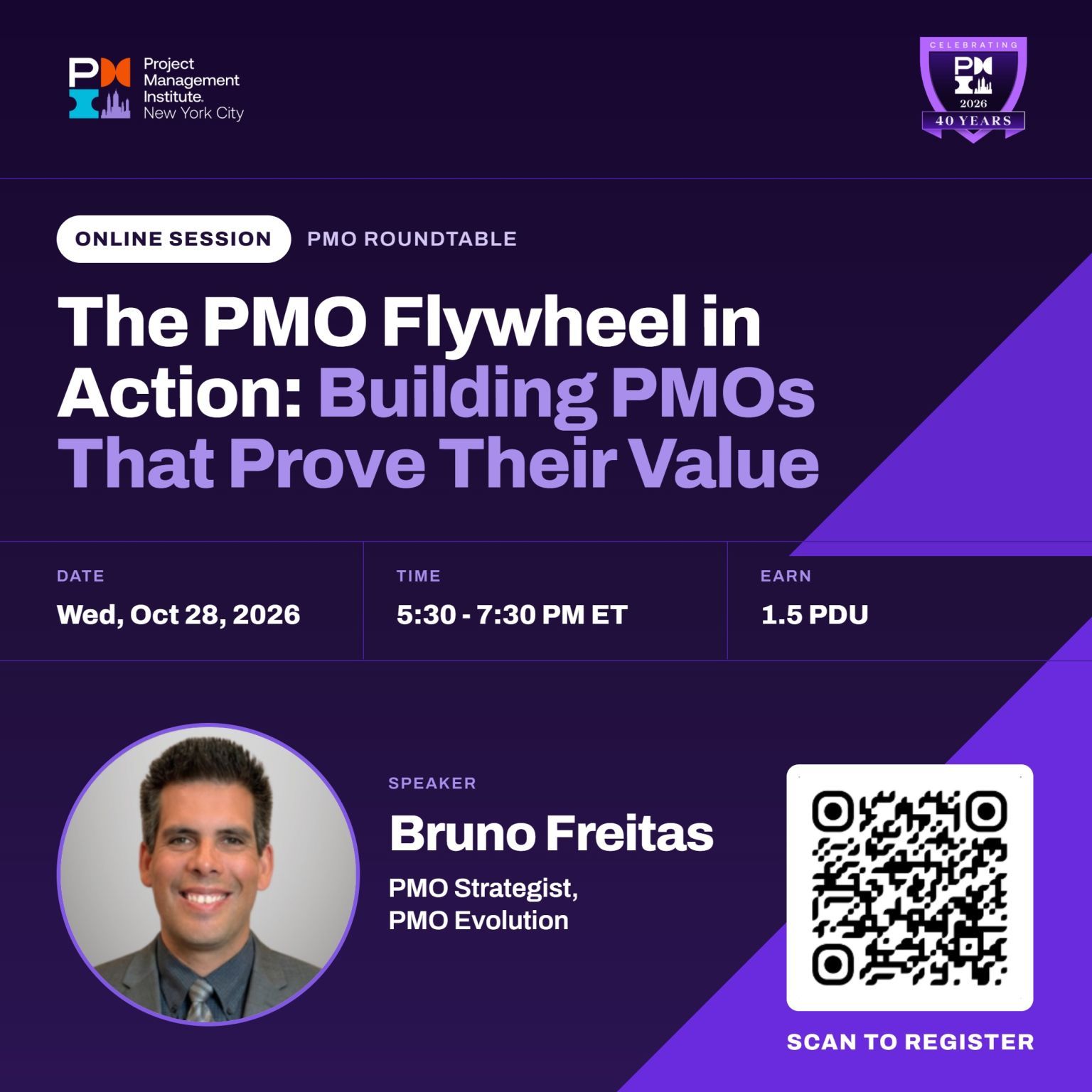
I'm excited to join the PMI New York City Chapter for their PMO Roundtable.
The PMO Flywheel in Action: Building PMOs That Prove Their Value
Wednesday, October 28, 2026
5:30 to 7:30 PM ET
Online, 1.5 PDU
Since it's online, you can join from wherever you are. I'd be glad to have you with us for the conversation.
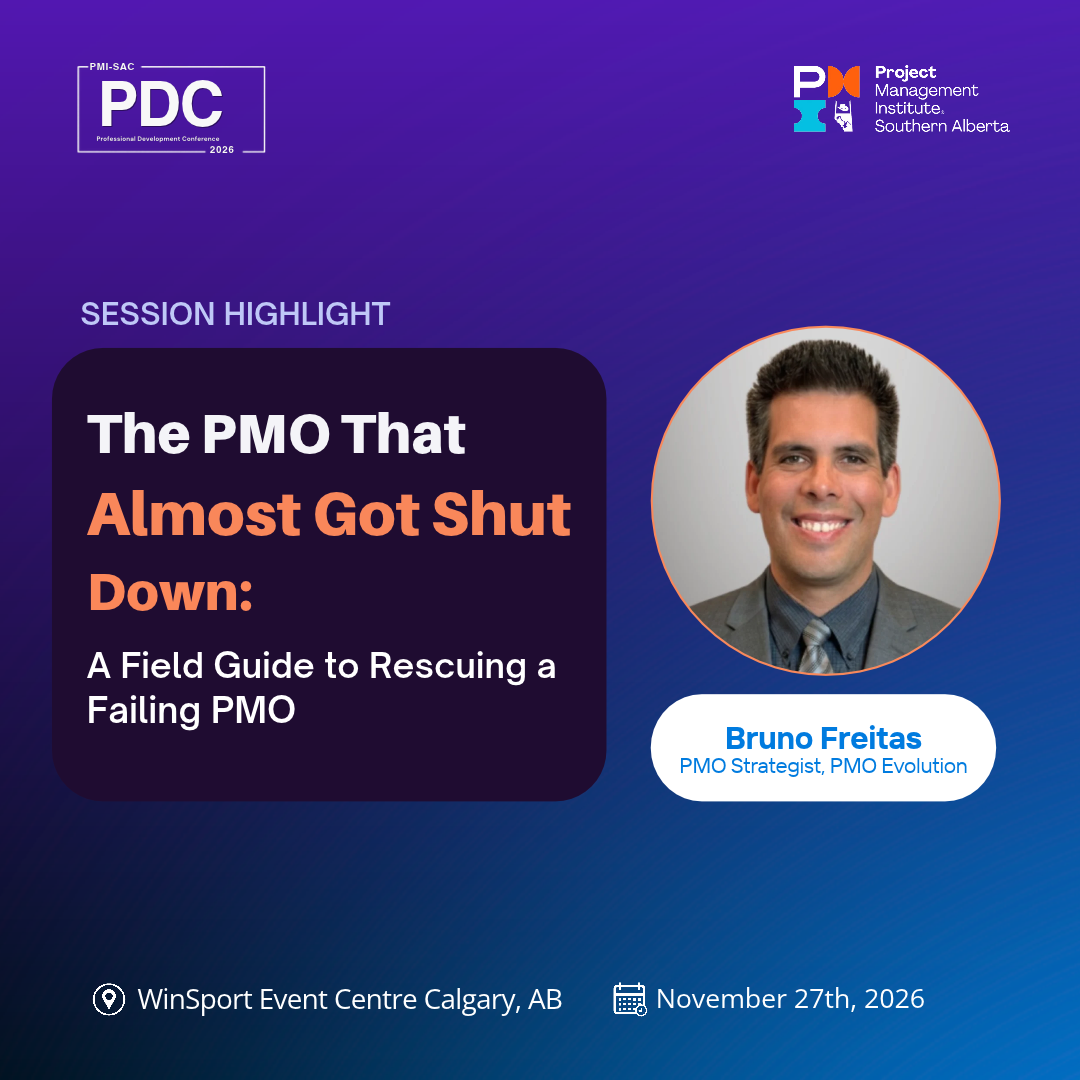
I'll be presenting this session at the PMI Southern Alberta Chapter's conference. If you're in Calgary, I'd be glad to see you there.
Register here: https://site.pheedloop.com/event/pmisac2026/home
Thank you for reading. If you'll be at any of these events, in person or online, I'd love to hear from you. Send me a message on LinkedIn.