
The thirty-day conversation
A PMO director I have known for years called me in August. A new CFO had given her thirty days to show why her office should keep its budget. Not thirty days to write a charter. Thirty days to justify six salaries.
She sent me her service list before our call. Fourteen services. Methodology. Templates. Training. Intake. Reporting. Tooling administration. Resource management. Benefits tracking. Audit support. Onboarding. Lessons learned. Change management. Project coaching. Executive reporting.
Six people. Fourteen services.
I asked her which four of the fourteen an executive would fight to keep. She could not answer for more than two.
That is the problem with most PMO operating models. They were not designed. They accumulated. Somebody needed a template in 2021, so the PMO built a template library. Somebody wanted a tool administrator, so the PMO took the tool. Five years later, the office is responsible for fourteen things, delivers four of them well, and has no language for saying no.
What a PMO operating model actually decides
A PMO operating model answers three questions and nothing else.
- hat does this office own.
- What does it enable without owning.
- What does it refuse.
Most PMO charters I read answer the first question with a list and skip the other two entirely. That is why PMO scope creeps. An office with no written refusals absorbs every orphan process in the organization.
The 2026 PMO research points to the same direction. Executives now reward strategic contribution and treat delivery reliability as the price of entry. PMI's own 2026 study found senior executives want more PMO investment in strategic alignment and benefits realization than PMO leaders themselves do, by a wide margin. You cannot contribute to strategy from under fourteen service lines.
Here are the five disciplines I use in the Assess stage of the Vision2Value Framework when a client needs to redesign the operating model.
Discipline 1: Count what you own, then price it
Three columns. Every service goes in exactly one.
Own means the PMO is accountable and the work stops if the PMO stops. Portfolio prioritization. Capacity visibility. Decision support. Benefits tracking. Four to five services maximum for a team under ten people.
Enable means the PMO provides the standard, the tool, or the coaching, and somebody else does the work. Project schedules belong to project managers. Risk mitigation belongs to risk owners. Status data belongs to the people who have it.
Refuse means the PMO states plainly that this is not its work and names who should have it. This column is the one nobody writes.
Discipline 3: Attach each owned service to a decision
For every service in the Own column, write the decision it feeds and who makes that decision.
Portfolio prioritization feeds the funding decision, made by the investment committee. Capacity visibility feeds the sequencing decision, made by the portfolio owner. Benefits tracking feeds the continue-or-stop decision, made by the sponsor.
If a service does not feed a named decision made by a named person, it does not belong in the Own column. I have retired entire reporting streams on this test alone, and nobody asked for them back.
Discipline 4: What should a PMO refuse?
This is the question PMO leaders ask me most often, and the answer is more specific than people expect.
Refuse work where the PMO has accountability without authority. Tool administration is the clearest case. The PMO is blamed when data is wrong and has no power over the people who enter it.
Refuse work that belongs to a line manager. Resource assignment inside a function is a management decision. The PMO makes the cost of that decision visible and stops there.
Refuse work that exists because a document exists. If the only reason a service survives is that somebody once asked for a template, retire it and see who notices.
Refuse anything that would make your owned services worse. A PMO that takes on a fifteenth service at the cost of its prioritization quality has traded the thing executives pay for.
Discipline 5: Put the refusal in writing
A verbal refusal lasts until the next reorganization. A written one survives it.
One page, signed by your sponsor. Three columns. Date it. Review it every budget cycle.
Smartsheet does this well because the list stops being a document and becomes live. A sheet with one row per service, columns for own, enable or refuse, the hours it consumes, the decision it feeds, and the accountable name. A dashboard on top showing hours by column. When somebody proposes a new service, the request goes in as a row, and the conversation starts with what comes out to make space for it.
The PMO director I mentioned cut fourteen services to four. Portfolio prioritization, capacity visibility, decision support, benefits tracking. Everything else moved to a named owner in the business or stopped.
Her budget survived. What surprised her was how few complaints arrived. Nobody missed the template library.
Your action for next week
Open a blank page and write your real service list. Not the charter. Everything your team actually does.
Put each one in the Own, Enable, or Refuse column, and write the decision each owned service feeds. Then take it to your sponsor and ask him to sign the Refuse column.
If that conversation is harder than it should be, our PMO Value Blueprint is a four to eight week Assess engagement that produces exactly this, with the capacity data and the governance redesign behind it. No sales pitch, just a thirty-minute conversation: calendly.com/pmoevolution
PS. If your 2027 development plan includes a portfolio or PMO credential, the PMI-PMOCP and PfMP Accelerator pages are at pmoevolution.com/training.
Upcoming Events
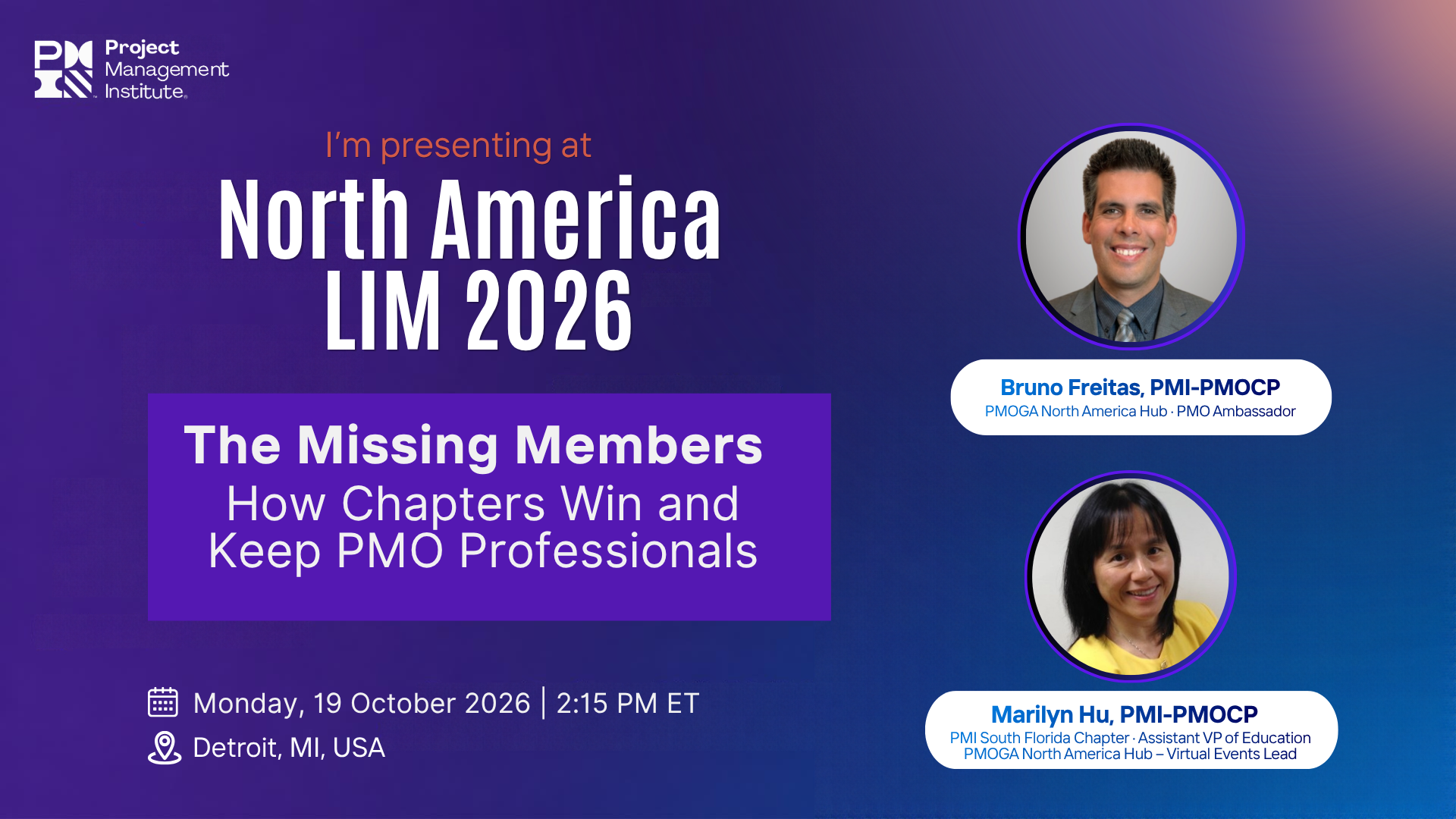
I'm presenting at PMI North America LIM 2026 in Detroit, together with Marilyn Hu. In "The Missing Members: How Chapters Win and Keep PMO Professionals," we'll work with chapter leaders on why PMO professionals drift away from their chapter, and what chapters can do to keep them. Will you be at LIM? Join us on Monday, October 19 at 2:15 PM ET, and let's connect after the session.
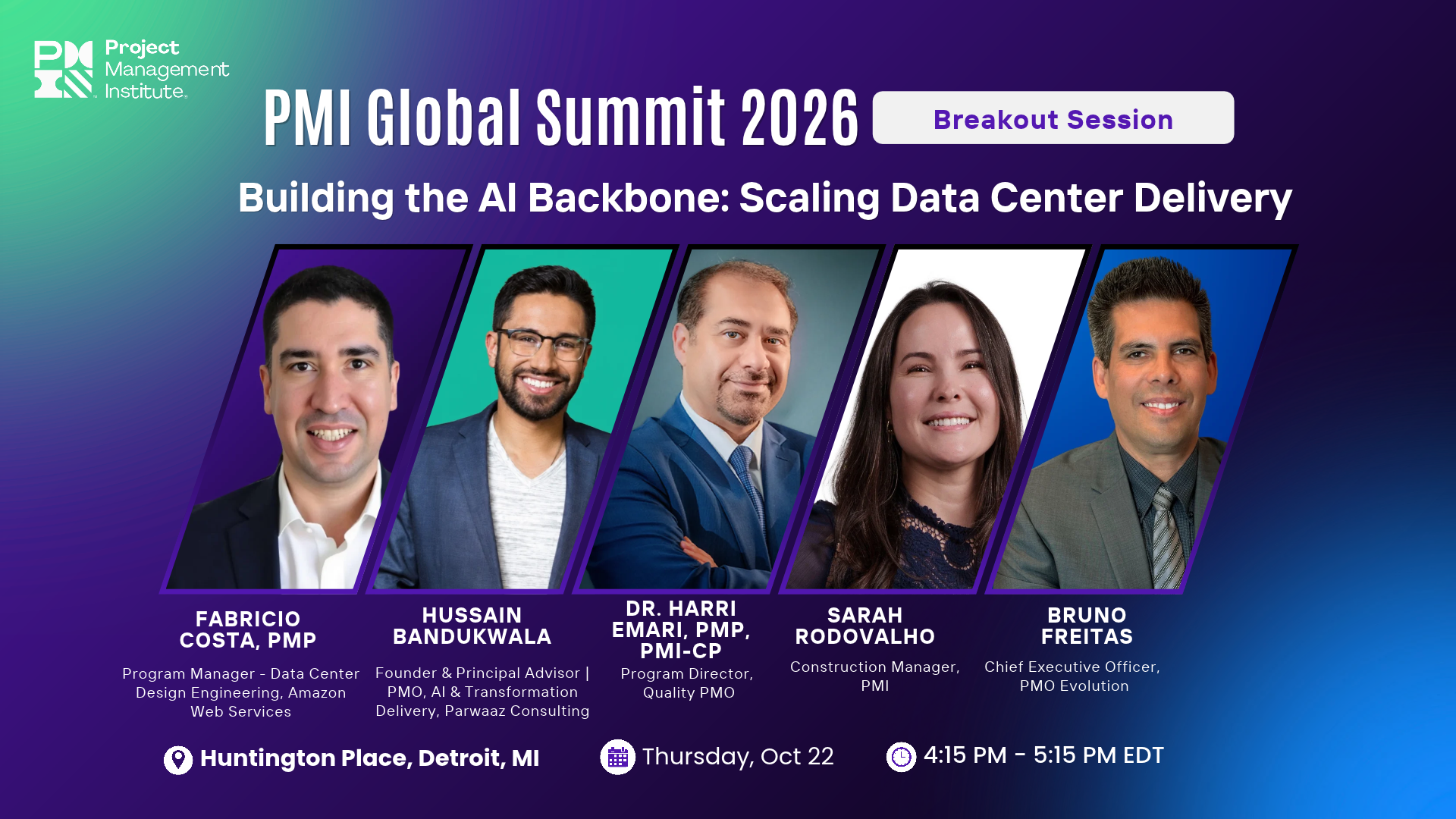
PMI Global Summit 2026, Breakout Session
View the session details: https://events.pmi.org/flow/pmi/gsdetroit26/landing/page/sessions/session/1788876835285001BO7g
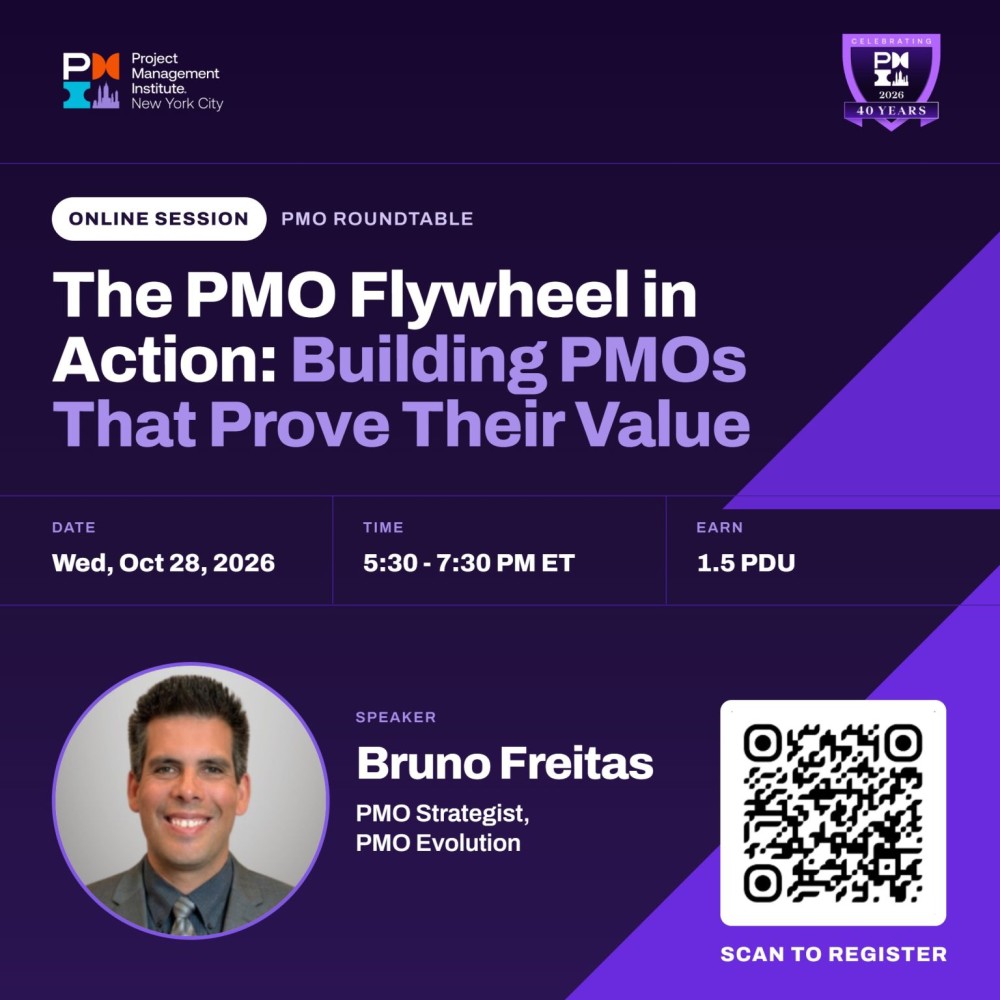
Join me for an interactive PMINYC Chapter session on building a PMO that proves its value. I'll walk you through the PMO Flywheel, introduce you to the PMO Global Alliance community, and share real lessons from my own PMO work.
This event is open to non-PMINYC members as well. If you are interested to join us, don't miss out: https://lnkd.in/gCFrh863