
Portfolio OKR Tracking: Prove Your Strategy Is Moving
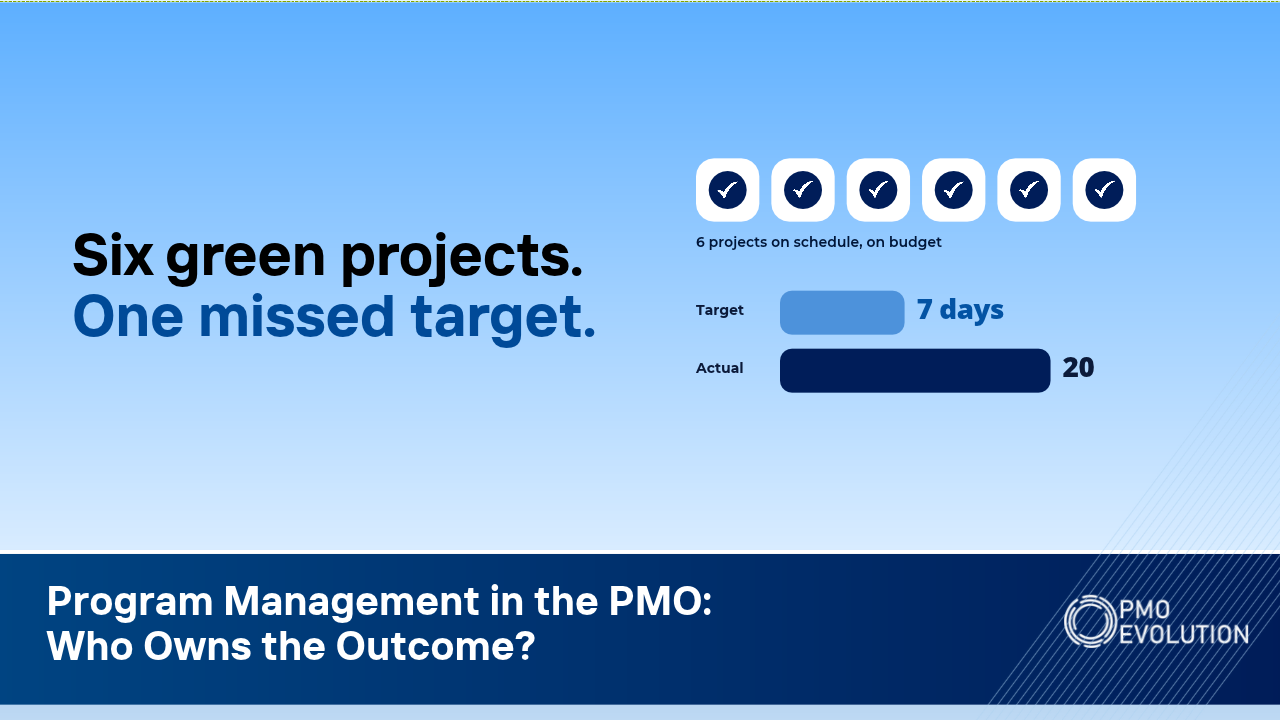
A few years ago, I walked into a quarterly business review with the best delivery numbers of my career. Ninety-two percent on-time completion. Twelve projects closed. Budget variance under five percent. The portfolio slide was a wall of green, and I did not rehearse it because numbers like that defend themselves.
The CEO let me finish. Then she asked one question: "Which of our five company OKRs moved because of this portfolio?"
I did not have an answer. Worse, nothing in my reporting could attempt one. Every metric I owned measured whether work was proceeding. Not one measured whether the business was different because of it.
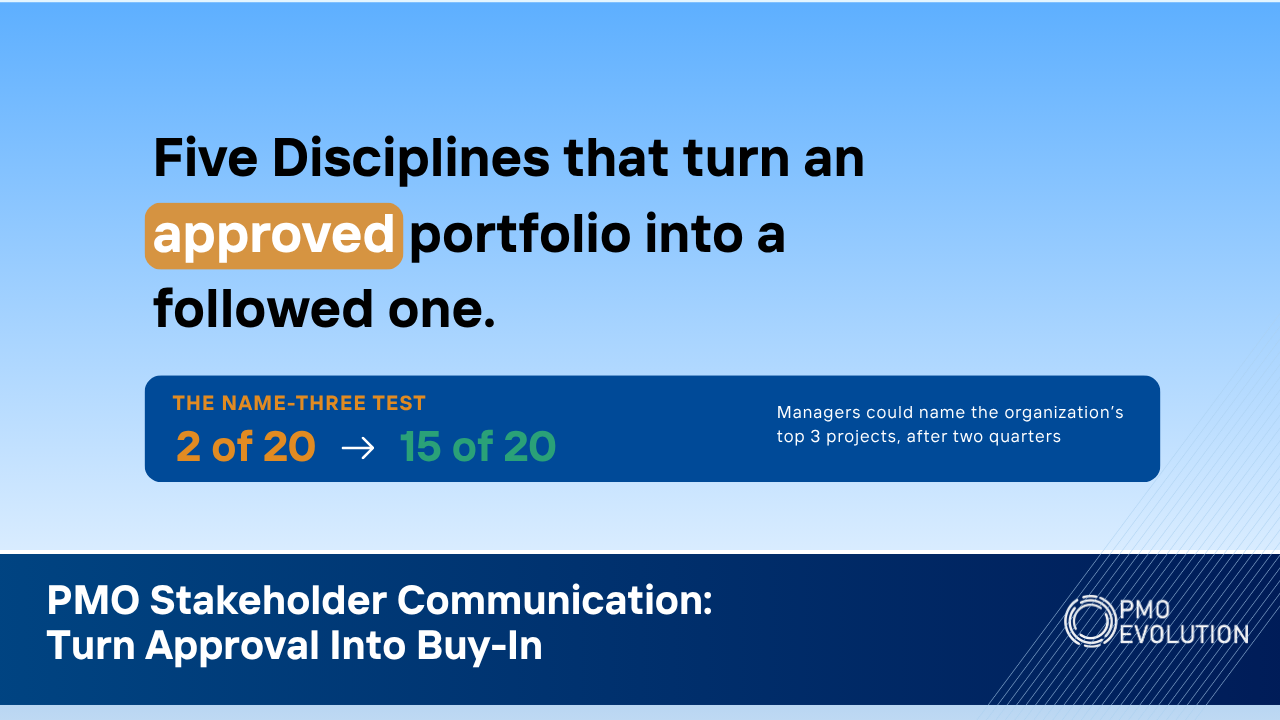
That question cost me a bad night and gave me the operating discipline I have carried into every portfolio since. If you lead a PMO in 2026 you will face some version of it soon, because the pressure has changed. Every major PPM trend report this year says the same thing: executives are done funding delivery for its own sake. They fund movement. Portfolio OKR tracking is how a PMO proves movement, and it comes down to five disciplines.
Discipline 1: Map every project to a live OKR
Not to a sponsor. Not to a budget line. To a current, named objective the executive team is answering for this year.
Run the mapping exercise cold and expect discomfort. When I first did it, more than a third of my portfolio mapped to nothing current. Those projects were not failures. They were orphans: approved under an old strategy and never re-questioned, because approval, once granted, is rarely revisited.
The rule that fixes it costs nothing: no project enters the portfolio without naming the OKR it serves. If a project maps to no live objective, that is not a reporting gap. That is a prioritization decision waiting to be made, and surfacing it is exactly the kind of PMO strategic alignment work executives notice.
Discipline 2: Define the movement metric before approval
Every business case promises a number. The problem is what happens after the promise. I once audited 27 approved projects and found 3 whose benefit figures anyone was still measuring. The other 24 numbers had done their one job, winning approval, and retired.
So make the metric a condition of entry, with four parts: the metric itself, its baseline value captured before delivery starts, the target value that defines success, and a named owner who outlives the project team. No baseline, no approval. A benefit with no baseline is an opinion with a decimal point.
Expect sponsors to push back for about a quarter. Then expect better projects, because people write more defendable numbers when they know the number will be checked.
One warning from experience: resist the urge to accept a basket of metrics per project. A project chartered to move five numbers is accountable for none of them. Force the choice of one primary metric at intake. The argument that choice provokes between the sponsor and the PMO is not friction. It is the first real strategic alignment conversation most projects ever get, and it costs you nothing but a meeting.
Discipline 3:
How often should a PMO review strategic KPIs?
Quarterly, and separately from status meetings. Status asks whether the work is proceeding. The strategy check asks whether the work still deserves to proceed. Mixing them kills the second question, because schedule talk expands to fill any room it is in.
The check itself is a filter with three questions per project. Does it still map to a live OKR? Has the metric it exists to move changed since last quarter? Knowing what we know today, would we fund it at this cost? Three yeses and you keep it, and stop over-reviewing it. A no on the metric alone means fix: the project may be healthy and the measurement broken, and you need to know which. A no on the OKR or the funding test means stop or rescope, and that is where next quarter's capacity comes from.
Twenty minutes per project, four times a year. In my experience this strategic KPI tracking cadence frees more capacity than any resource management tool, because it retires work that no longer earns its place.
Discipline 4: Put delivery health and KPI movement on one screen
The gap between a green portfolio and a flat strategy survives because nobody ever sees both at once. Delivery lives in status reports. Strategy lives in a board deck. Different rooms, different owners, no confrontation.
In Smartsheet, the pattern I build is one metric sheet per strategic KPI holding baseline, target, current value, and refresh date. Each project's benefit tracker cell-links into the metric sheet it feeds, so movement rolls up without anyone rekeying numbers, and Control Center provisions the structure automatically for every new project. Then one dashboard, two panels, side by side: delivery health on the left, KPI movement on the right.
The pairing is the point. The first time a wall of green sits next to a wall of flat, the conversation your PMO has been avoiding starts on its own, and it is the most valuable conversation in portfolio management.
Discipline 5: Act on what the numbers say
Tracking that changes nothing is decoration. The check has to route into decisions: capacity rebalanced toward objectives that are behind, orphaned projects stopped or rescoped, and every miss fed back into the portfolio roadmap so next quarter's intake reflects what this quarter taught you.
The hardest version of acting is stopping a healthy project. I once stopped one that was green, well run, and $1.4 million from finishing, because the objective it served had died in a market exit a year earlier. Three ugly weeks, one escalation, and then two of our strongest teams landed on a capacity-starved priority. A year later, nobody remembered the stopped project. Everyone used what the redeployed teams built.
A green project serving a dead objective is not an asset. It is capacity held hostage.
Your move next week
Pull your full project list into one column. Next to each project, write the live OKR it serves and the metric it will move. No meetings, no tooling, one afternoon.
Then count the blanks. That count is your agenda for the next quarter, and it is the single fastest measure I know of how connected your portfolio is to your strategy.
If the blank count made you wince, that gap is exactly what the PMO Value Blueprint was built to close: a focused four to eight week assessment of how your portfolio connects to strategic results, often including a working Smartsheet pilot. It starts with a 30-minute conversation, no sales pitch: https://www.pmoevolution.com/pmo-consulting