
Closing the Loop: How PMOs Turn Delivery Into Measurable Value
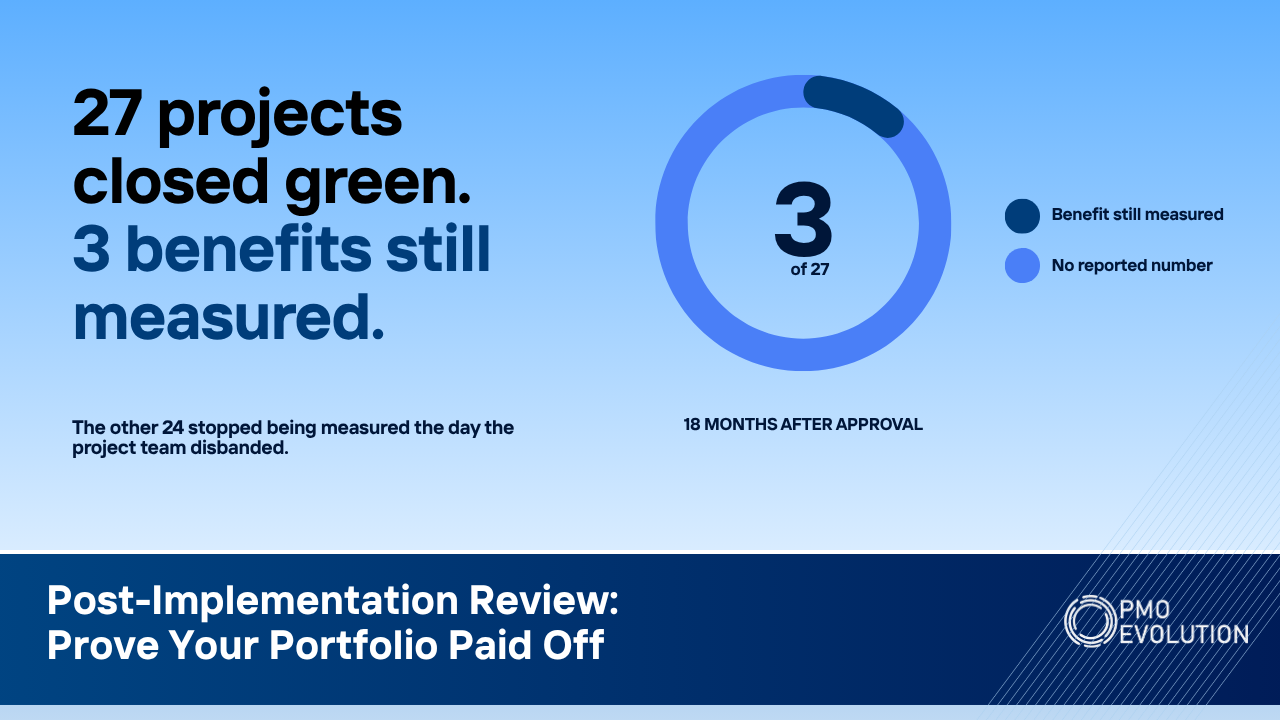
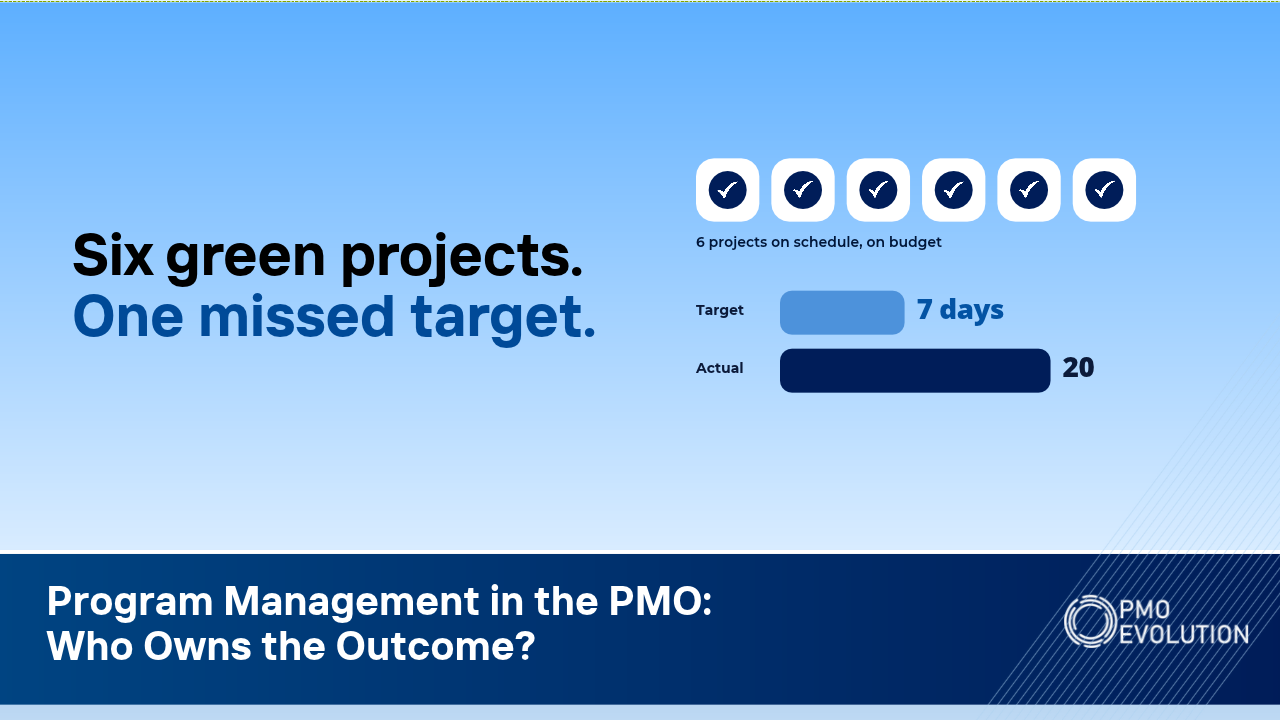
Most PMOs can demonstrate delivery performance. Far fewer can demonstrate value persistence. They struggle to explain, with credibility, what that work ultimately changed.
Executives approve initiatives because they expect outcomes. Growth, protection, efficiency, resilience. What they often receive instead are outputs with poor execution. It reflects the absence of a deliberate mechanism to connect delivery to value over time.
This is where many PMOs feel exposed. They oversee delivery, but they cannot always show how delivery translated into the results leaders care about. Closing that loop requires more than post-project reporting. It requires treating benefits as a management concern from the moment work enters the portfolio.
Why benefits realization must start before delivery begins
When PMOs defer benefits thinking until delivery is complete, they lose the opportunity to influence decisions while options still exist. Assumptions about value harden into expectations. Scope changes erode outcomes quietly. Teams optimize delivery success even when the original business intent has shifted.
More effective PMOs anchor benefits early by translating investment rationale into observable conditions. What must be true for this initiative to create value? What behaviours, capabilities, or cost structures must change? Which assumptions are most fragile?
Experienced PMO leaders recognize this pattern. They have seen initiatives delivered “successfully” that left executives asking why the promised impact never appeared. By that point, the portfolio has already absorbed the cost.
PMOs that close the loop treat benefits as a live management concern from the outset. They help leaders articulate what must change operationally for value to materialize and what signals would indicate that value is at risk. This shifts benefits from a retrospective exercise to a guide for decision-making during execution.
By treating benefits as a management input, not a reporting output, PMOs give leaders the opportunity to intervene while options still exist.
Outputs vs. outcomes: defining success properly
Outputs describe activity. Outcomes describe impact. Confusing the two creates a false sense of progress. Teams deliver against plan while value drifts.
PMOs sit at the center of this tension. They must respect delivery discipline while keeping attention on why the work exists in the first place. That balance requires clarity. What outcome justified this investment? What conditions must hold true for that outcome to emerge? And what delivery decisions threaten or reinforce those conditions?
Defining success properly does not require complex metrics. It requires discipline in naming what matters and resisting the temptation to treat completion as a proxy for value.
Tracking benefits during and after execution
Benefits rarely fail all at once. They erode incrementally.
Small scope decisions shift focus. Delays change timing assumptions. Dependencies introduce unintended constraints. Without visibility during execution, PMOs discover benefit gaps only after delivery has ended, when recovery options are limited.
PMOs that manage benefits effectively track them alongside delivery as an integrated view. They surface early signals that indicate value may not materialize as planned. They use those signals to prompt course correction conversations, not post-mortem explanations.
After execution, the work does not end. Mature PMOs continue to track whether outcomes actually occur, especially when realization depends on operational adoption, behavior change, or downstream initiatives. This reinforces accountability without turning benefits into a compliance exercise.
Portfolio performance insights executives actually care about
PMOs add strategic value when they translate delivery activity into insights leaders can act on.
Which initiatives protect the most value?
Which assumptions no longer hold?
Where does the portfolio concentrate risk or opportunity?
These insights allow executives to adjust direction deliberately rather than reactively. They also reposition the PMO as a partner in value protection, not just a reporter of progress.
Using data to continuously adjust priorities and investments
As conditions change, PMOs must help leaders revisit earlier assumptions and adjust priorities accordingly. Data plays a critical role here—not as an answer, but as an input into judgment.
Tools and platforms can improve visibility across initiatives, benefits, and dependencies. They can accelerate insight and shorten feedback loops. They cannot decide when to persist, pivot, or stop. PMOs provide that judgment by connecting data to context and consequence.
When PMOs use data this way, prioritization becomes a continuous discipline rather than an annual event. Investments align more closely with emerging reality, and leaders retain confidence that the portfolio reflects intent, not inertia.
Closing the loop between delivery and value does not require new frameworks. It is about maintaining a clear line of sight between why work was approved and what it actually changed.
PMOs that do this well influence which initiatives continue, which adjust, and which stop. They protect value by ensuring that delivery remains anchored to outcomes, even as pressure builds.
If measuring real value remains a challenge in your organization, you are not alone. Many PMOs inherit delivery responsibility without the mechanisms needed to manage outcomes over time.
If prioritization or value realization continues to feel elusive, I’m always open to exchanging ideas and approaches that have worked in practice. Often, a focused conversation helps clarify where the loop breaks, and how to close it more effectively.
👉 Reach out to me here https://www.pmoevolution.com/contact